Mold Remediation in Gettysburg, PA
A contained cleanup for Adams County homes — not a bleach wipe and not a vague “we do mold too” pitch. We start with moisture, then isolation, then removal.
Why Gettysburg mold jobs look different
Gettysburg borough sits inside Gettysburg National Military Park. A lot of the housing that tourists photograph — brick Federals and Victorians on Baltimore, Chambersburg, York, and Carlisle streets — still has rubble-stone or brick foundations and unfinished basements. Those walls wick groundwater after a wet spring and hold humidity through July and August.
Adams County as a whole is small-town and agricultural. The same crew that opens a Steinwehr Avenue rental basement may be under a farmhouse crawl space in Biglerville the next day. That mix is why we stay a mold shop, not a national restoration menu.
This page is the process. Supporting work lives on the services list: inspection, basement removal, crawl spaces, and post-leak mold.
IICRC S520-style steps we follow
The industry reference for professional mold cleanup is ANSI/IICRC S520. We describe the job in that order so a homeowner — or an adjuster — can follow it: inspect, control moisture, contain, remove, then dry.
1. Inspect and decide. Walk the house, map moisture (meter + infrared where it helps), and separate “stain” from “active growth.” Lab sampling is a tool, not a default. See mold inspection.
2. Control the water. Remediation that ignores a leaking sill, a bulkhead, or a dirt crawl space is a redo. After a burst pipe or storm, the clock is 24–48 hours — details on water-damage mold.
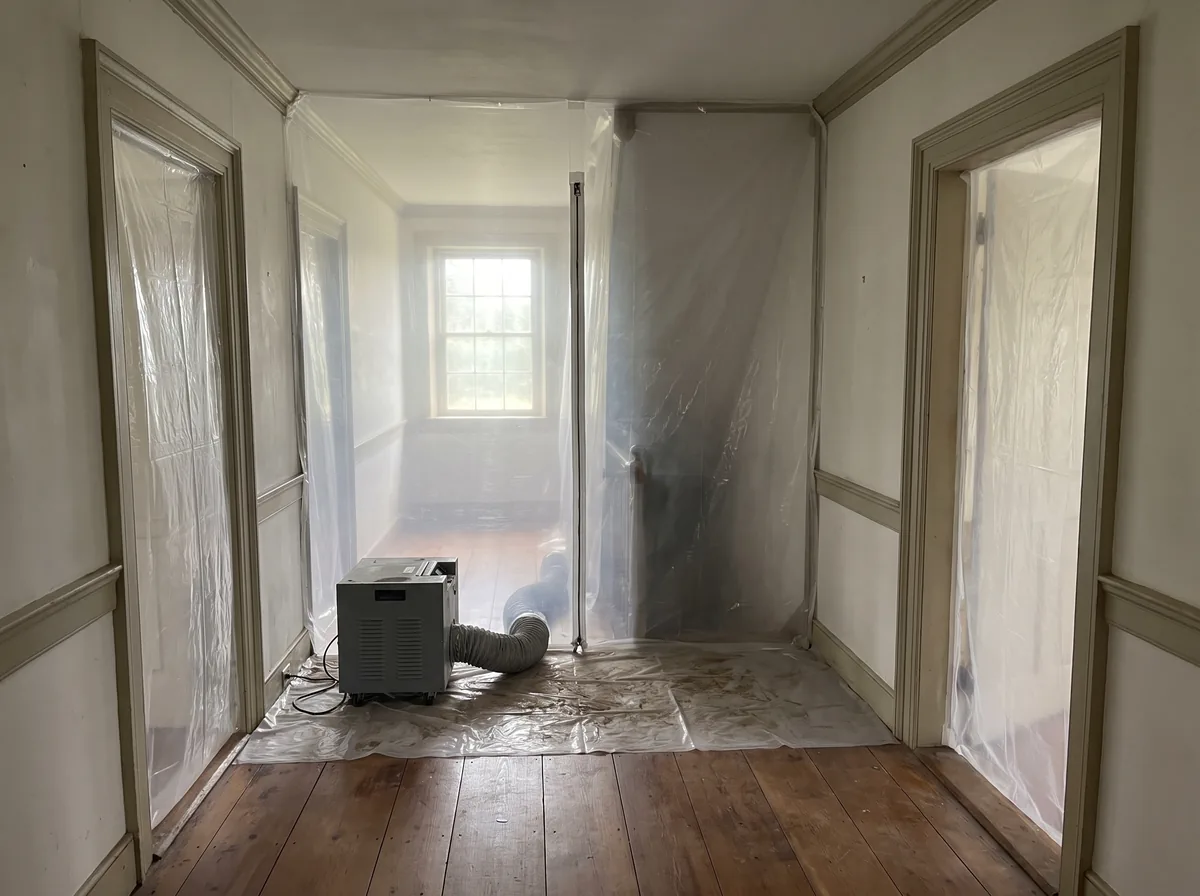
3. Contain. Critical barriers, zipper doors, and negative air keep spores out of the rest of a tight Gettysburg borough house — especially important on shared walls in places like McSherrystown.
4. Remove what cannot be cleaned. Wet drywall, blown-in insulation, and rotten trim come out. Sound framing is cleaned, not demolished for show.
5. Clean, dry, and verify. HEPA vacuuming, detailed cleaning, and drying equipment. Post-remediation checks are visual plus moisture — not a stack of leftover test kits.
What you can expect on a Gettysburg job
We will not sell “black mold panic” as a product. Dark staining can be several species; black mold remediation explains when a pro should handle it and when a stain is just a stain.
The first visit is an on-site look at moisture, then a contained cleanup if the house needs it. Read the services list, then use the quote form or call the number in the header to reach Mold Remediation Gettysburg.
Next step: the remediation process, the services list, or the quote form.
What you get from a dedicated mold crew
Mold is the whole job here — not a tab next to fire, packing, and a statewide dispatch board. One process, one county, one quote form.
-
Moisture first
No containment until we know why the material is wet.
-
Contain, then demo
Barriers go up before anyone pulls a basement wall.
-
Adams County stock
Stone, block, and crawl spaces — not a generic drywall speech.
Frequently Asked Questions
Questions we hear on Adams County jobs.
Is IICRC S520 a Pennsylvania license?
No. S520 is an industry standard for how a mold job is scoped and performed. Pennsylvania does not issue a statewide mold-remediation license. We still follow that order on Adams County houses so the work is contained and the moisture source is in the plan.
How long does a typical Gettysburg remediation take?
A single contained basement room is often a few days of on-site work plus drying time. A whole-house job after a leak, or a farmhouse crawl space that also needs encapsulation, runs longer. The inspection sets the calendar, not a generic “48-hour” promise.
Do you work outside the borough?
Yes. Adams County is the footprint — Hanover’s eastern edge, Littlestown, Fairfield, Biglerville, McSherrystown, Bonneauville, New Oxford, and East Berlin are on the service-areas list.
How much does mold remediation cost in Gettysburg?
The quote follows the house, not a county-wide average. What moves the number is how many rooms are wet, whether we are cutting a finished basement, how tight the access is on a borough lot, and whether a crawl also needs a liner. Photos through the quote form get you a range after we can see the job.
Can we stay in the house with kids and pets during cleanup?
Often yes if the job is a contained basement or crawl and the living floor stays behind barriers. Keep kids and pets out of the work area. A whole-house leak or HVAC-involved job may mean you sleep elsewhere for a few days — that call is made at inspection.
Do you do clearance testing after the work?
We verify visually and with moisture meters before we leave. Lab clearance is useful when a physician, a buyer, or an adjuster wants a named result. It is not a default add-on on every Adams County basement. Mold inspection explains when sampling actually changes the plan.
Will bleach or a fogger fix an Adams County basement?
No. Bleach on stone or block does not dry a wet joist, and fogging does not replace removal of contaminated drywall. Cleanup follows the containment process: find the water, isolate the space, then take out what cannot be cleaned.
Nearby areas
Ready to talk through the job?
Call or send the quote form — we reply with next steps.