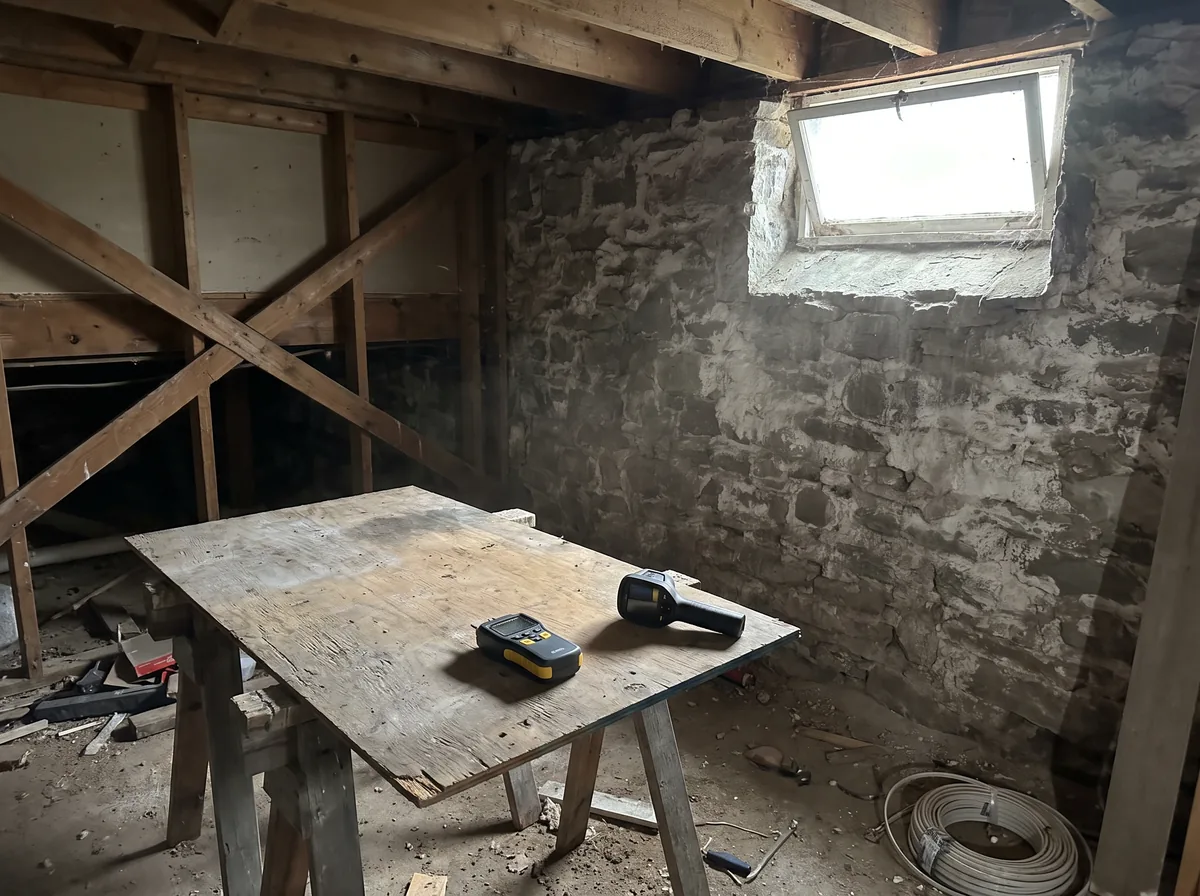
What we check on a Gettysburg mold visit
The first walk is a moisture and building check. It is how the crew decides what to contain, not a sales tour of the house.
The water, before the growth
On borough brick and township stone we start at the wet wall, the bulkhead, the sump, and the sill. A stain with a dry meter is a different job from a wall that is still taking water after a March thaw. If the leak is active, cleanup waits on stopping it.
Basements and the finish in front of them
Gettysburg, Bonneauville, and the older streets in Littlestown often have rubble stone or brick behind paneling. We check the bottom of the drywall, the tack strips, and the back of any cabinet against the foundation. Infrared is for finished walls where the meter cannot reach the masonry.
Crawls, attics, and the fan that dumps inside
A dirt crawl gets a look at the joists, the soil, and whether vents are feeding July humidity. An attic gets the bath-fan termination and the roof deck above any ceiling stain. Those two assemblies are written up separately from a basement room because the work is different.
The meter side of this visit is on how we read moisture. The order of a cleanup is on the remediation process. Town notes live under Adams County service areas.
Frequently Asked Questions
Do you name a person or a license number on this page?
No. Pennsylvania does not issue a statewide mold-remediation license. This page is the checklist the crew uses on an Adams County house, not a biography.
Is a lab sample part of every visit?
Only when the name of the growth would change what gets removed. Most Gettysburg basements are decided with a meter, a look at the back of the drywall, and the water path.
Related services
Want this checklist on your house?
Call or send the quote form — we reply with next steps.